Keep Us Guessing: Worldbuilding with Real-World Details
Light spoilers ahead for: Pokemon: Red Version/Blue Version, Blue Prince
Recently, I played through Pokemon: Red Version for the first time since I was a child. Most of the key details I remembered, but one recurring element I did not - that has been all but sanded off of the franchise entirely at this point - was the inclusion of several real-world references throughout the game’s setting, the Kanto region.
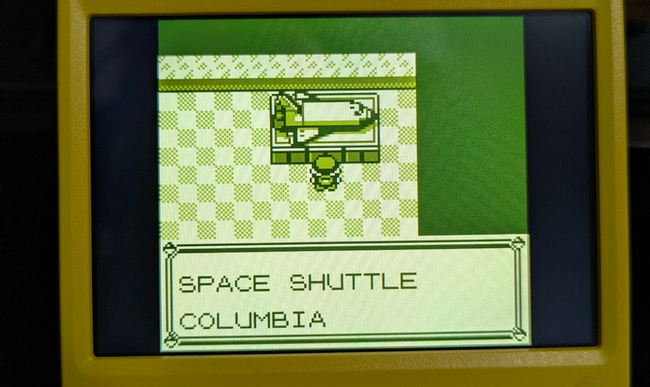
Early on, you visit a science museum. Here, a nice man tells you about “the moon landing,” even giving you the date is happened: July 20, 1969! A model space shuttle in one corner of the museum’s ongoing space exhibit is labeled: “Space Shuttle Columbia.” Oh wow, so I must just be in the Pokemon-laden part of the real world? Like there’s a United States and Russia out there! Maybe the S. S. Anne sails to California!
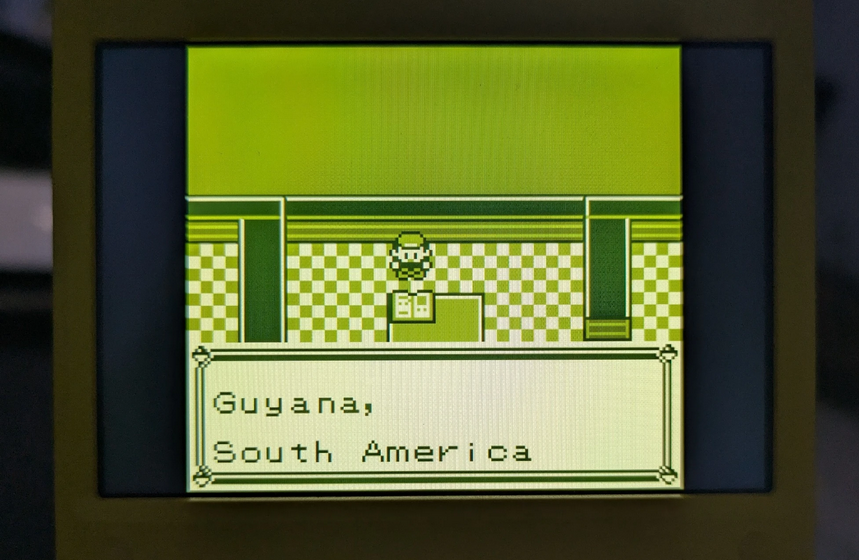
Later in the game while exploring the secret biological experimentation lab hidden in a dilapidated mansion (yes, Pokemon has a Resident Evil section), you uncover several journal entries about two newly-discovered Pokemon: Mew and Mew’s too-powerful child Mewtwo. One of these journals mentions that Mew was discovered and captured in “Guayana, South America.” Oh wow, so Pokemon exist around the world! There are only 150 (or 151, if Mew is any indication) but that must mean, given how many real world species of animals there are, that they’re a new thing, existing in addition to mundane animals, and/or that they were only recently discovered! So this is a modern setting in the real world with the primary difference between this timeline and ours being that a relatively small number of Pokemon exist?! Cool!
Now if you were (like me) the annoying kid who read the game guide front to back during school every day or just had the displeasure of knowing that kid, you may already know that “Kanto” is actually the name of a real-life region of Japan. For many non-Japanese children though, it read as a fictional name when playing for the first time - but learning this fact had the same effect on me as re-discovering these small details did now on my recent replay: It grounded the fictional in the historical/real in a way that actually enhanced my engagement with the setting. It was just a fascinating idea that Pokemon were existing in my world - nearly the same one I was riding the bus on every morning. It made me examine and question much more of the game’s setting that I would have otherwise.
Sadly like most too-big-for-their-own-good media properties, almost all of these fun edges were sanded off and Pokearth has been rendered entirely fictional, aside from a not-wanting-to-uncanonize-something-from-the-one-that-made-them-popular-to-begin-with wiki page for Guayana and almost never mentioning it again in the future. Pokemon is - I believe - a far weaker setting for it.
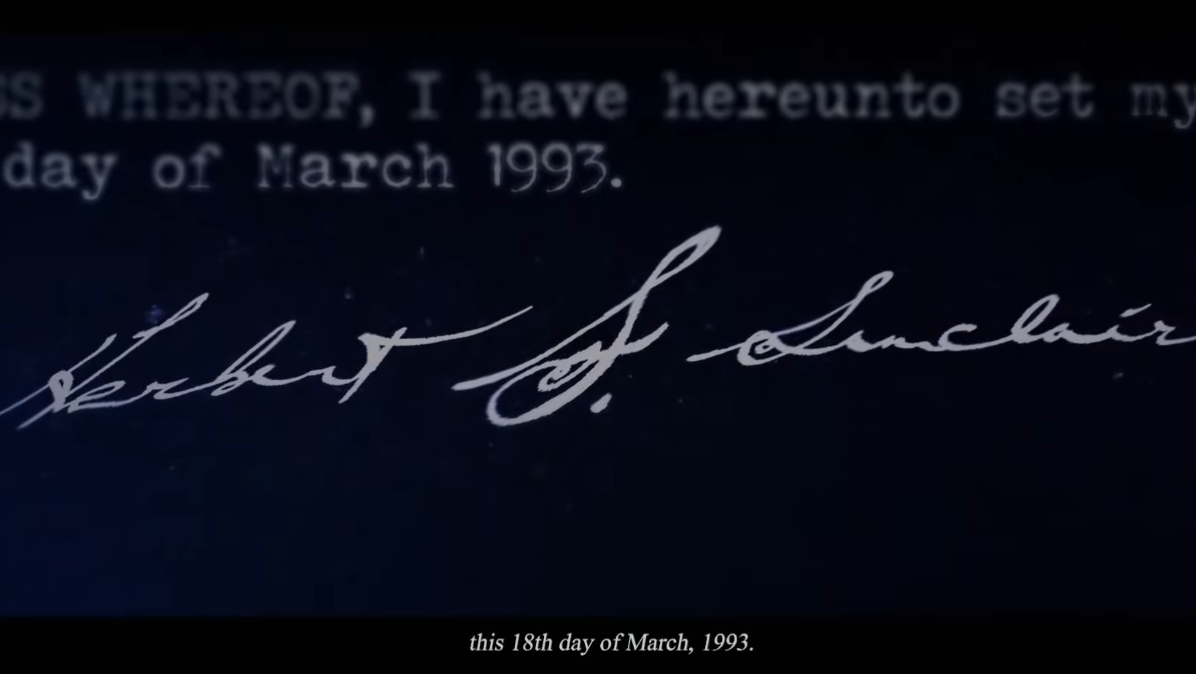
Blue Prince is a puzzle adventure game from early last year. The game is set in a recently-deceased family member’s eccentric manor, and the opening cutscene tells us we are playing in (or near) March of 1993. As you explore the house, everything you see makes sense given the family inheritance and that time period: antiquated knickknacks and Victorian-era architecture sharing space with clunky CRT computer terminals and the occasional keycard-requiring security door. A fitting blend of old and new.
So where is this manor? The architectural style, language, and landscape outside give us some indications but nothing early on gives us concrete information. Are we in the northeastern United States? The western coast of Canada? Somewhere in the United Kingdom?
The truth, which comes together piece by piece as you accumulate enough clues contrary to your assumption in the following early days of play, is you aren’t anywhere you and I know at all. You aren’t on Earth as we know it. Factions, technologies, countries, politics, languages - all of it is different. The year may be 1993, but that is mostly a matter of mistaken familiarity. A year sharing the same number but tracking another world’s calendar - and yet it is still a calendar that includes all the months we know (and all the same number of days as well).
Once you find maps and textbooks, the difference becomes even starker - this is not a historical fiction or another timeline. It’s another world. And yet, more real world details continue to bleed into this fictional land: Christmas exists much as it does in our world and its December 25th date remains the same. Wait… is there a Jesus of Blue Prince?
For a game built on exploration and secrets, this blending of the real world with the fictional one had me wracking my brain in its early hours and when it pulled that rug out from under me, I felt smacked in the face by my own over-assumption while the scope of the mystery grew at the same time - but again, I was intrigued when a real world date or bit of knowledge would then come to my aid in solving a puzzle… When nearly everything is fictional but something isn’t, suddenly whole swaths of new things feel possible within the game.
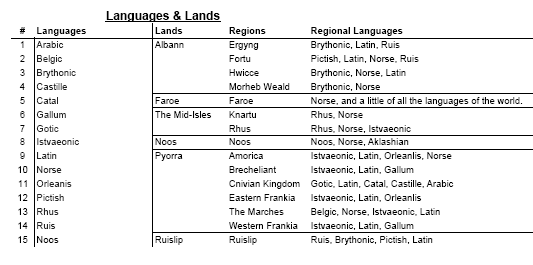
Recently, I started a solo campaign of Luke Gearing’s Wolves Upon the Coast. The game is sparse with its worldbuilding (or rather it lives almost entirely within the tables and lists of the game’s rules and in the hexfills of its sprawling world). Here is the entirety of the game’s introduction:
Your history is gone. It was taken from you, or you from it.
You were thralls.
Now your master lies dead in the bottom of a raiding vessel, equipped for adventure.
You are free.
In character creation, you roll to see how many languages your character speaks or reads. The languages are not included in the rules, but many are listed in an included rules reference sheet (and the Region descriptions). You might recognize some of them: Arabic, Latin, Norse, and more. Wait… is this a historical game?
A ship, which you quickly learn your now-free characters have command over, is a karvi, a viking vessel. Many others on the ship table are of similar, real-world origin: knarr, snekkja, and skeid. Oh, so this is a viking game? I’ve seen plenty of other viking-inspired but otherwise fantastical games (Skyrim, for example), but “Arabic” doesn’t exist in Tamriel…
Later in the rules, “Byzantine Plate” is mentioned among other armor on an equipment list, but is that simply referring to a type of armor for our sake as the reader or does the Byzantium Empire actually exist here? Well, now I'm not sure.
Upon pulling up the world book, you won’t - as you may have expected after what I just said - recognize the region names. Albann isn’t a real place, now or ever as far as I know. But it is quite similar to Albion, a fairly common alternative for Great Britain and England-like settings over the years (Fable, for example). As you read on (as the GM) or discover through play, you come to see that there is a lot of “vikings in the British Isles” happening here, but most of what you encounter is fictional (that is to say, non-historical in origin). And yet the presence alone of real-world languages, ships, and even possibly empires broadens the world to include new possibilities - and often much more intriguing possibilities than “this world has goblins” does.
Could we discover a North African vessel long lost and far from home? Will a merchant speak of happenings with the Pope, living half the world away? If these fictional and fantastical things (purple worms, magic, and the like) exist than how have those elements in turn effected the real-world elements along the edges?
In the end, this blending of real world history and names with the fictional and fantastical creates a mythic and epic quality to Wolves that something only entirely fictional or entirely historical could not achieve. Plus, it opens the door for players to infuse more real-world historical knowledge they may have into the game without requiring it as a baseline they mus have in order to play. But really - more than anything else - it’s simply just very interesting to consider (and leverage) during play.