
#04: Building the Pitch

Thoughts on selling yourself & building a good Kickstarter page
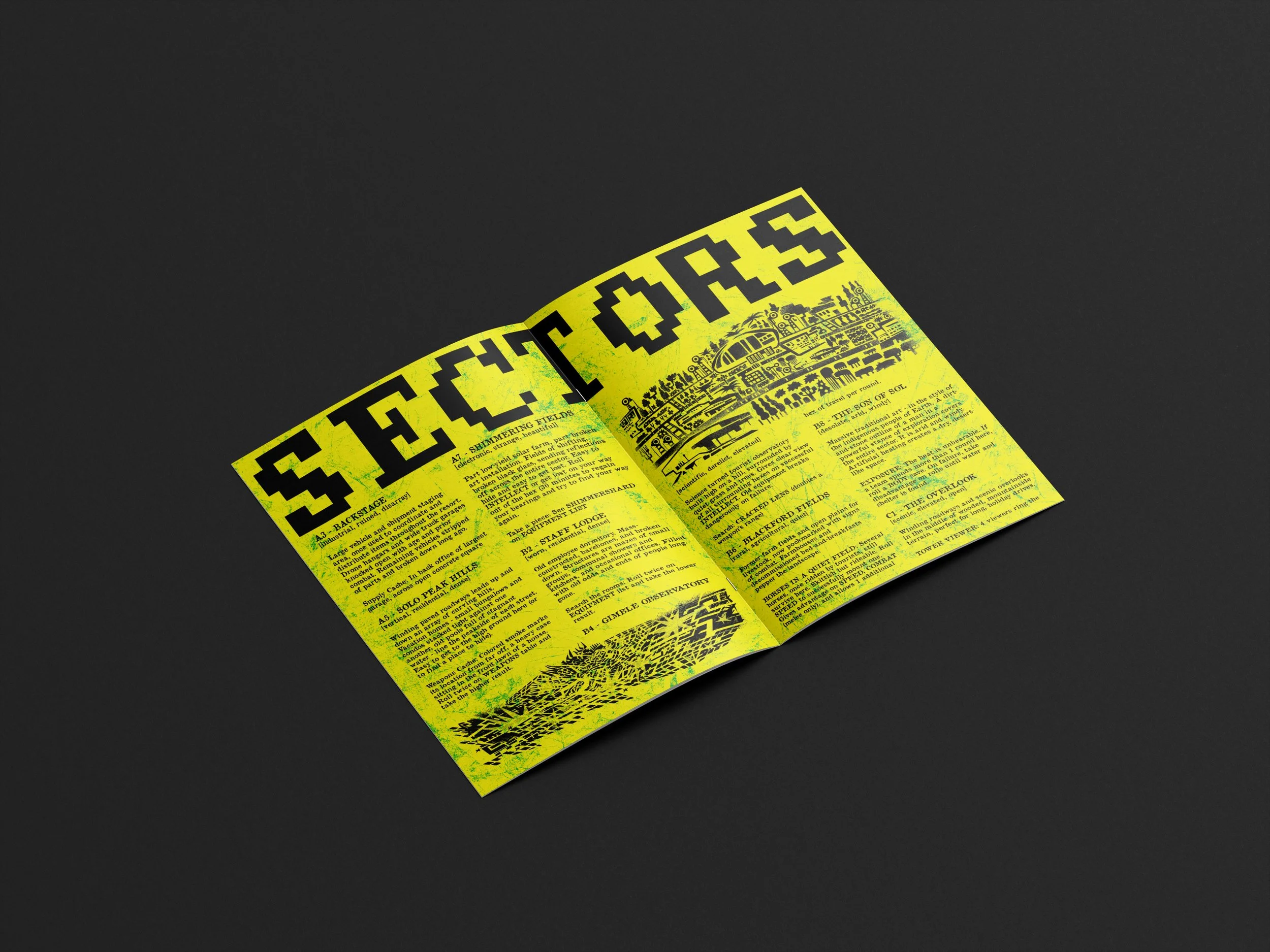
work-in-progress layouts/mockups (and text, for that matter)

Earlier this week, I sent the Bloodfields manuscript off for copyediting! It was an exciting and intimidating moment. I spent a whole day knocking out all the remaining little bits and bobs throughout the text before having a video chat with my editor, Vi Huntsman. The chat with Vi was great and they really helped to make the process approachable and were very open and honest which is great for me as a newcomer to editing in the RPG space. In the past, I have almost always been the one editing my own work and most often in a local newsroom environment. RPG writing is a very different beast, but as always, everyone in the community is so helpful and transparent so it is much easier to get in and to grow then I would have initially thought.

That said, now that I am not focusing on the text of the zine itself. I need to focus on the next big task: the Kickstarter page! At this stage in the project, a great Kickstarter page is probably the single most important thing to do. There is plenty of time to finish the text, experiment with layout, commission more art, and get books shipped, especially with the extended time tables I’m giving myself as a first time crowdfunder, but there is less than 2 weeks to launch and what’s on that page is all that is going to make the majority of people decide to give me their money (or not)!

In the past, I worked a handful of sales jobs and was quite good at them, but I didn’t like that I was. Being too good at sales often feels like straight up manipulation or exploitation of others, especially if you don’t truly believe in the value of the products you are actually selling (like when I worked for a huge corp in car insurance, for example).

This is where self-promo differentiates itself from the typical sales work: I have already spent all of this time (and some money) creating this project I want to see exist and now I get to tell people, openly and honestly, about how excited I am to have the chance to make it a real physical thing for myself and others to enjoy. If I have to “sell” anything, I would always rather it be something I created and I am excited to have exist in the world (beyond any hopes of individual profit or some grander career plan).

work-in-progress section headers

I’m straying here from talking about the actual Kickstarter page itself though! Here are the elements I believe are key to any Kickstarter page and the biggest things I hope to convey as I build my pitch:

  1. What is it and do I want it?

  2. Do I believe you can do it?

  3. How much does it cost (with shipping info too)?

While some of these seem really straightforward, I know I’ve experienced KS pages myself that don’t clearly answer all 3 of these and really they are all that matter for me. Bower’s Game Corner on Youtube does a great series of KS review videos in which he enthusiastically walks through this thought process in a way that really clicks with me.

The faster I can answer those 3 elements the better and then everything else is just extra bits to build excitement in my audience.

Right now, I am working on a handful of sample layouts and mockups (seen throughout this missive) that will give me images that will do a lot of that work for me. A key mockup with some additional text can, in a glance, tell you what it is (oh, so it’s a zine - I see the cover has the Mothership logo and a brief tagline on it - oh okay, so it’s a battle royale zine for Mothership) and the biggest aspect of what it’ll cost (aw, so $8 digital and $15 physical).

From there, I go into the text descriptions, most of which I already have put together from existing threads, the original Kickstarter page I sent in for approval, or from the press kit I recently put together as part of Tony’s awesome #ZIMO2022 workshop. After the initial explainers (1-2 paragraphs each on the key aspects of the zine, with custom headers splitting them up for more visual flavor), I’ll move onto #2 on that list: why folks should believe that I can deliver on the promises I’m making. This aspect may be the hardest part for many folks as it is where you most have to sell yourself, but you should never talk yourself down - just try to avoid talking yourself up. Be honest with yourself and your audience. People connect to that!

For me, that means I will speak to my experience as a writer and editor, the awesome team I have working with me in Roque Romero and Vi Huntsman (and a tbd fulfillment partner possibly) and then my own recent experience of writing, editing, and doing layout for The Mole on Pirad One, an adventure that has sold over 350 copies since its launch in September and I fulfilled myself prior. I don’t need to boast or lie about anything, just tell folks the facts.
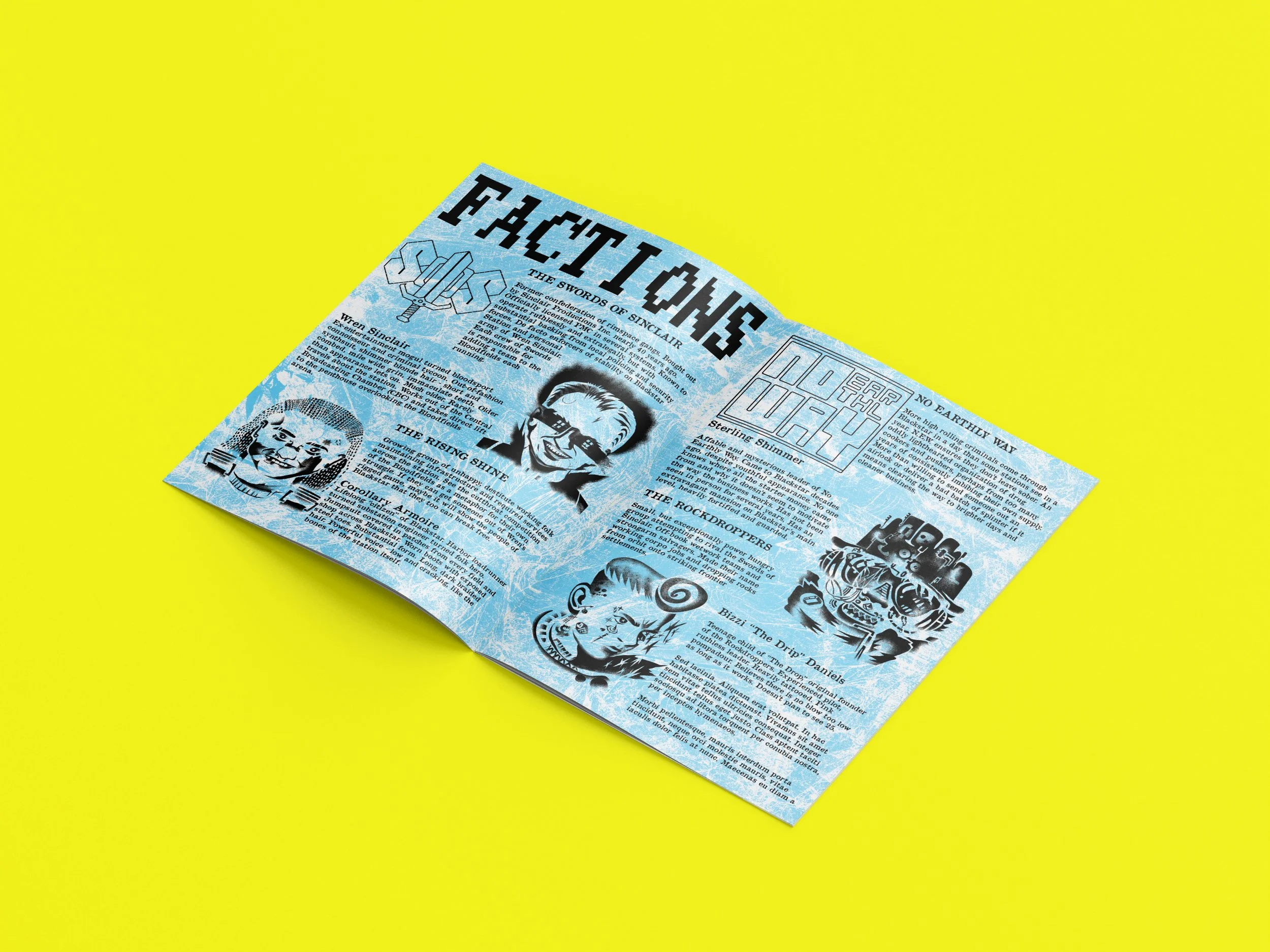
more work-in-progress layouts/mockups/text (with NPC art by Roque Romero)

Lastly, I need to get all of my ducks in a row in terms of whether I’m doing the fulfillment in-house (most likely) or with an external partner. I’ve reached out to a few but have yet to hear back and really want this ironed out before the launch, given the wild year of printing and shipping ahead of us. This would answer the second half of #3 - how much will shipping cost, how will it work, etc.

Beyond that, everything else will just be about building excitement and hopefully getting folks to talk to their friends about the project! I think there’s a lot of value in looking at other past Kickstarters that you would like to be in a similar size and scope to if things go well and going after the structure and style of those pages. For me, that’s projects like Lone Archivist’s What We Give to Alien Gods or Ian Yusem’s The Drain - not that I think I’ll be as successful as either of those awesome books. Thousands of past campaign’s pages are still live so find successful projects like yours (or that you’d like to be like) and take what worked for them!

This was a rambley one as you can see I am still working through a lot of my thoughts on this front. I will probably do a post-mortem sometime after the campaign where we can dig into how these things actually worked out for my page.

If you’ve got any big tips on Kickstarter page must-haves, let me know in the comments cus I don’t want to miss anything!


MORE COOL THINGS
Tim Obermueller, creator of The Burning of Carbex, is itchfunding his newest project as part of #ZIMO2022 and was awesome enough to ask me to create a shady corporate sponser for the zine’s deadly game show as part of a stretch goal for the project! I’m really excited for this one. If Bloodfields is Battle Royale, PUBG, and Hunger Games, The House Always Wins feels more like Running Man and Squid Game to me - a different but just as horrifying kind of death game!
Stella Condrey just launched a really awesome Patreon in which you get a physical pamphlet in the mail every month for $4! An awesome way to support an indie creator doing really wonderful stuff able to be added in to loads of existing games (Mothership-focused so far) and for Stella to keep the pamphlets flowing!
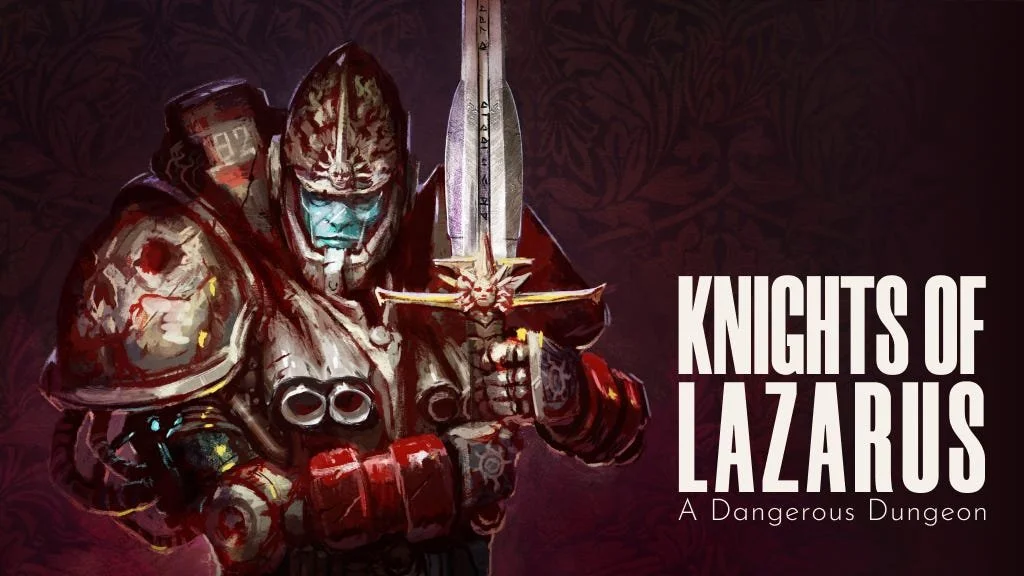
Just look at this art!

Marco Serrano over at SpicyTuna RPG has been a really wonderful and super helpful voice for me over these handful of months of being active in the indie rpg creator scene and his new project, Knights of Lazarus, just got a proper unveil and launched its Kickstarter pre-launch page as well. It looks SICK - wonderful art, awesome layout, and a dungeon blending science fiction and fantasy in some ways I’ve never seen in any other Mothership adventure to date. Follow it HERE.
Zine Month continues to be a great repository for the MASSIVE amount of rad upcoming projects out there. Give it a look as the showcase continues to grow!


FOLLOW MY KICKSTARTER
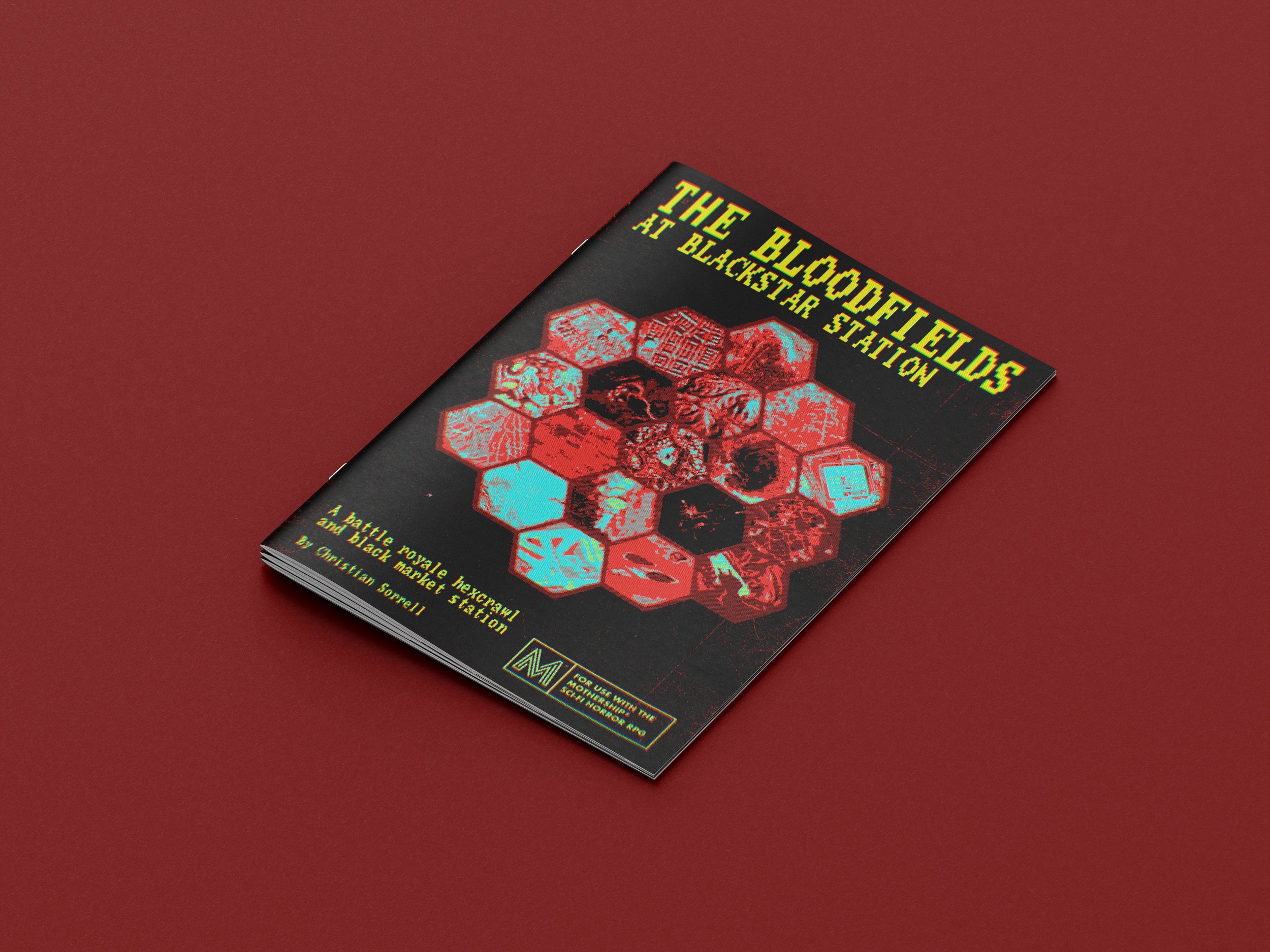
this cover was originally just a quick mockup but I have fallen in love with it now


Thank again for reading! I really do hope these are at least entertaining and at most valuable! Feel free to leave a comment or reach out to me on Twitter if there’s anything you are loving, disliking, or anything in particular you’d like to see me share my thoughts on. - Christian

#03: Bringing Battle Royale to Mothership

And Why Sometimes Throwing Everything Out Helps

This is the first in a semi-planned series of preview deep dives into The Bloodfields at Blackstar Station, my Mothership zine coming to Kickstarter next month!

First, I wanted to walk through the thought processes around translating battle royale structures and tropes to tabletop and how, specifically in a rules-light roleplaying context, I really had to hone down what was worth focusing on and what was simply dead weight.

The prior, almost entirely scrapped, way to run the Bloodfields as the Warden

In late November of last year, I reached the point of knowing that I really wanted to make this project a reality and as such, much of it had to go from some decent ideas typed quickly out into a Google Doc and had to actually take shape as a thing that was playable for a group at the table.

Originally, I wanted to create an almost systems-free structure for running a battle royale game on top of an existing TTRPG (Mothership, in my case). This earliest version of the Bloodfields saw Wardens, using a number of random tables and a battle tracking sheet (see above), placing all of the enemy teams, deciding their movements around the arena according to preset “attitudes” (essentially fight, flight, or freeze), and then using certain values to determine if teams won or last battles that were occuring “off-screen” across the arena. The original idea being that the Warden could pull from all of these extra details because they knew how everything in the entire arena was playing out. Of course in practice, this was (just as it probably sounds from me writing it out) a lot of work. I do think it was well streamlined for what it was - but even 5 minutes of dead time between in-game rounds for the Warden to essentially simulate everything happening in the whole arena was too much. It felt like it created a cool story in many cases, but it was a story that only the Warden would see in the vast majority of cases. So… I threw almost all of it out.

In going back to the beginning on my design process, I thought about what is key to any battle royale story and came up with a few core aspects: sudden/unexpected action, a variety of contestants coping with the situation in a variety of ways, massive hazards and ways the arena shifts to push contestants together, and more ways to win than simply playing by the rules. Whether it’s the original book or movie Battle Royale or more recent forays into that subject like Hunger Games, there’s always more than just a simple kill-or-be-killed game going on and the horrors of that game are always focused squarely on the central characters and their perspective. I kept all of this at the forefront of my mind and designed a system of play with some big changes from the original.

Now, Wardens only track enemy teams when they first enter the players’ story, simply rolling 2d10 and writing a team name on the Bloodfields sheet. If the enemy team is killed by the players right away, they cross them off and move on. If the team is evaded or flees or the players flee, the team stays on the list and that list becomes its own table for future prompts - seeing memorable enemy teams returning, sometimes multiple times in the same game. Wardens still track sectors being “redlined” where they are filled with a variety of hazards to push contestants towards one another — again a few simple rolls and crossing out of a sector on the map, but there’s not bookkeeping around tracking or moving or dictating offscreen combat between enemy teams. Importantly to play as well, this minute-or-less of tracking of the battle royale game itself is also played out at the same time via in-game announcements from Wren Sinclair, the owner of Blackstar Station and MC for the event. So the Warden simply narrates through the few rolls they need to make as they make them and then play continues.

Beyond that, everything else is player and table driven. When players enter a new hex, the Warden rolls on a table depending on the in-game round to see what happens and goes from there. When a round ends, roll on another table and see what wacky modifiers the slimy business mogul running the game throws into the mix, etc. Ideally, it will be “sight-readable” — a term normally used to show someone’s skill for reading music but that I apply to adventures in which I am able to GM them without any prep (and without even having read the book beforehand). It’s my goal to make Bloodfields a completely sight-readable experience. It’s not there quite yet but a few edit passes and a bit more testing, and I think it will really be something special.

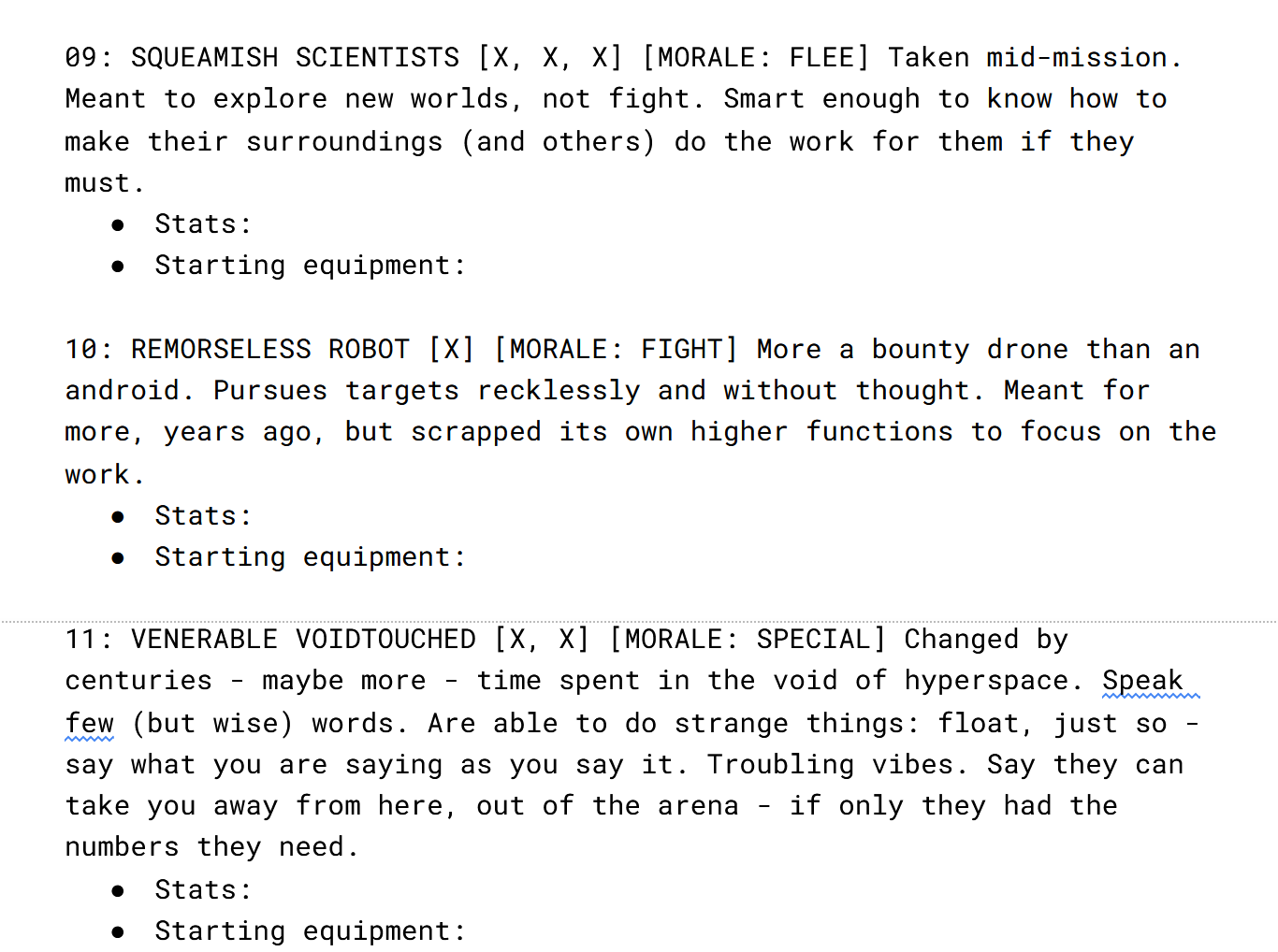
WIP Contestants List

Maybe one day I’ll go back to that original version of the Bloodfields and turn it into a solo story game where you get to simulate a battle royale all on your own and see what stories it creates from that top-down perspective, but now as I am about to wrap up the full manuscript, I feel confident that the new Bloodfields is one that will be vastly simpler for Wardens to run and will create faster-paced and more exciting stories for the players.


If you haven’t seen, Kickstarter recently only sort-of announced that Zinequest won’t be happening this February and is instead being moved to August to coincide with GenCon, a move that has largely baffled everyone and left many folks (like myself) without any real support from the crowdfunding platform less than a month out from when we thought we would have another big promotion (like there was the last 3 years).

Thankfully, Feral Indie Studios was already in the works on a February zine promotion focused on moving away from Kickstarter in the long term. Enter Zine Month 2022! So far, ZIMO has seen a massive swell of support in the last week and a lot of it is still in flux in terms of what it is and isn’t exactly. Whether or not it becomes a more community-driven way to support one another as indie creators or a more directed effort by Feral Indie Studios with specific goals, it’s definitely worth following, especially over the next two months.

Check out the site with more information about what the event is and isn’t currently as well as a wonderful showcase of projects (including Bloodfields) coming next month! #zimo2022

https://www.zinemonth.com/


OTHER GOOD THINGS

I completed my read-through and reactions to the Mothership 1e WIP Player’s Survial Guide over on my Twitch and archived on Youtube. I’d love to know what others have thought after their initial reads of it. Especially if you’ve found anything interesting in how the rules are coming out in play!

I’ve been buds with the folks over at The Jodo Cast, a Star Wars gaming podcast, for years. They have been out of the actual play game for a while (at least in terms of longer-form, more serious-minded campaign play). They asked if I’d be willing to play in their new Force & Destiny campaign set during the High Republic era and I was happy to join! It’s a 2 PC campaign where I play Jedi Knight Colil Nu and my friend Evan plays Jedi Padawan Vulkite Aggeros. Having one player be significantly higher than the other and getting to roleplay out that really core SW relationship was already a ton of fun. I’m excited to see where we go from here!

Guess what else? I have a project coming to Kickstarter on February 1st! If you are reading this, you probably already know that, but I’m not really going to shut up about it until the end of February! Sorry!

#02: My Favorite RPG Things of 2021

From dark fantasy to existential sci-fi to open-world roaming

Two years or so ago, I made a promise to myself to really, truly prioritize social time and play. Especially over the last year or so, it’s become increasingly easy to hide away in my own little cave and just stay there. Looking back though, this promise is one I really do feel that I kept. I got to play A LOT of great tabletop roleplaying game stuff in addition to working on my own creative endeavors in the space.

A new year is a new beginning, even if it is a totally arbitrary one. So with the new beginning, I figure its worth looking back on the last stage of my TTRPG life and go over the most wonderful standout experiences I had in 2021.


TREASURES OF THE TROLL KING by Chris Bissette

I have had the pleasure of running Mork Borg once or twice in the past. It was my first real experience with an OSR-style game and everything about it from the simplicity of the system to the over-the-top death metal vibes of the art and layout to the way its adventures tend to be written to be as prep-less and sight-readable as possible for the GM, I just loved. Despite that, I’d never gotten a chance to play a proper, longer adventure - only a one-shot here or there. That changed when my backer copy of TREASURES OF THE TROLL KING showed up.

TROLL KING not only matches the first-party Mork Borg book in terms of stunning art and layout (I mean just look at that cover) but it creates a wonderfully dark and delightfully weird trip through the overflowing sewers of a foul fantasy city at the end of the world that is as easy and fun to run as the GM as I imagine it is to play.

I ran this adventure in 3 online sessions using video chat along with an occasional image shared from the PDF to give a shared visual (or to allow for better spatial awareness). It went flawlessly: all but one character immediately took greedily of cursed coins - weighing themselves down with the burdensome wishes of others, the Fanged One critical hit with Death’s Horseshoe sending the titular Troll King itself skittering off to its lair - leading to a grand and frantic chase through the sewers and into more than one trap and danger, and a dozen or so more absolutely stand out moments. In the end, 2 of the 5 adventurers were dead but the fallen royalty’s sentient sword had overwhelmed the will of the Pale One’s last remaining monkey servant and become a proper adventurer itself.

A great adventure chock-full of enough strange and dangerous nooks and crannies that your players can miss half of them and still feel like they survived more things than they had any right to.

You can pick up your own copy HERE.

WHAT WE GIVE TO ALIEN GODS by Lone Archivist

Most of my readers will know that I have a fond spot in my heart for Mothership, but WHAT WE GIVE TO ALIEN GODS is another title that goes on the “the moment I got my backer copy, I knew I had to schedule a session ASAP” list.

ALIEN GODS is a very different kind of Mothership module. It’s a slower, stranger, at times intentionally difficult, and profoundly existential horror story. It reminded me more of a dark, ethereal adventure game (in the tradition of 90s PC adventure games) than your straightforward scary-aliens-in-a-creepy-place module. My players saw almost no combat at all until the end.

Over 5 sessions (played virtually with video chat and a discord channel for elements of the modules many puzzles), my players saw their two crews of characters (and A-team and B-team from the same ship) explore all three pillars of an ancient alien temple, learn much of a language that seemed to physically warp their mind, learned of a species ensnared by a being so powerful it may well be a god itself, and by the end, had to make awesome in-character designs that led to dire consequences for some and dramatic ends for others. Oh and the layout is just really captivating too (but that shouldn’t be surprising for anyone who has checked out any of Lone Archivist’s other work).

This module was the first adventure in our now ongoing Mothership campaign and the surviving characters now have a rich and dreadful web of complications and really intriguing choices to make from what they found, what they took away, and what they gave up (to alien gods).

Additionally, we played using what I called my “0.9e” of Mothership which was me pulling every sheet, chart and table I could from the Player’s Survival Guide preview video and Kickstarter page so we could test the new mechanics even before they released the work-in-progress files. Overall, we all loved the changes and the new Panic and Wounds systems in particular led to several wonderfully dramatic moments.

If you and your players enjoy deciphering strange runes, uncovering ancient lore, and losing yourself to grand cosmic influences, then I’d recommend picking up your own copy of What We Give to Alien Gods right HERE.

FORBIDDEN LANDS by Free League

I first learned about FORBIDDEN LANDS when I saw that Simon Stalenhag (who makes amazing art and wonderful stories to accompany it) did the art for the cover of the box set. I dug in a bit more from there and was really captivated by the luxurious and old-school feel of the game and everything in its box. A full-sized poster map to spread out on the table, stickers for adding your own landmarks to the map during play and two leather-bound books (probably the two nicest TTRPG books I own in terms of just pure feel of print and bind) all for a surprisingly good price. I picked it up on a whim while looking for something new to run virtually while our mainline DnD 5e campaign was paused due to the endless ongoing pandemic.

We played our first session in person, during one of those brief windows where it maybe seemed like we’d be able to really start doing that again. Our group became almost immediately captivated with it. Built on the Year Zero engine many of Free League’s game use, FORBIDDEN LANDS reskins and restructures it to focus on overland travel and open-world survival in a traditional fantasy setting. We simply chose a quick backstory for how the group had met prior to the start of the campaign, picked an area on the map where we would pick up and went from there. It is very much a game in the West Marches tradition of play which is to say it is very open world and entirely player driven. I rarely had anything to prep because the players chose where they wanted to travel across the world and the system helped to quickly generate what they found there and what happened when they did.

Before our 2nd session, all of the players had their own copy of the boxed set. This NEVER happens with my group. Typically, I invest in the copy of a game needed to run it for everyone and copy some resources from there, but by the time we got to Session 2 (now happening over video chat), everyone had read the entirety of the Player’s Guide.

In some ways, the traditional fantasy setting is a little too traditional (veering even into potentially problematic areas if you consider a lot of the recent discussions around DnD’s race system, for example), but what captivated all of us wasn’t the setting as much as the player’s ability to drive the story and place their mark upon the world. Full hireling and stronghold rules give players loads of concrete goals from the beginning of my group was just dying to get out into the world and make their dreams of fame, fortune and the security of a mighty stronghold a reality. It was a breathe of fresh air for us, coming off several years of almost-exclusively DnD 5e.

BUCKET OF BOLTS by Jack Harrison

This last one is a short and sweet one. After doing a podcast episode on Jack Harrison’s Artefact and backing his follow-up project BUCKET OF BOLTS on Kickstarter some time later. Jack reached out to me on Twitter with an early playtesting copy of the game.

Like Artefact, BOLTS is a solo journaling-style game focusing on an object rather than a traditional character. In BOLTS, that object is a spaceship and through play, you discover its many owners, all of the various places it has traveled, battles it has seen, and more. I had a wonderful evening creating the winding and epic tale of The Terigon.

A great way to play something rich and rewarding when your group can’t get together or as a lead-up to another campaign and game system where you want to create a ship that is ripe with history (maybe so it is there for players to discover through their own play). It’s a lore building game about the vital background character of every good sci-fi story: the ship.

You can pick it up HERE.


TEASERS FROM THE BLOODFIELDS

I am continuing full steam ahead on development and planning for my upcoming battle royale hexcrawl and black market station setting zine for Mothership! It’s an exciting and nerve-wracking time. I’m getting more and more sector and NPC art in these days from my primary artist (other than myself) for the zine Roque Romero. Here’s a taste of some of what he’s put together!

Bizzi “The Drip” Daniels

Teenage child of “The Drop,” original founder of the Rockdroppers. Experienced pilot, ruthless leader. Heavily tattooed. Pink pompadour. Believes there is no blow too low as long as it works. Doesn’t plan to see 25.

The Bloodfields on Blackstar Station is coming to Kickstarter on February 1, 2022! Click here to get notified of the launch the moment it happens!


OTHER GOOD THINGS

After folks on Twitter saying they’d like to see something like it exist, I did the first part of a read-through stream of the work-in-progress 1e Player’s Survival Guide for the Mothership Sci-Fi Horror RPG recently released after the close of their massively successful Kickstarter. The video is me reading through the book for the first time and giving some of my thoughts on the writing, game design, and more. Plus, you get to see a kitty if you stick around to the end.

The most massive third-party Mothership project to date - Hull Breach - just recently started its Kickstarter campaign. While I did not take part in this massive collaboration, it does feature over 30 indie creators, most of which I have come to know over the last several months and all do awesome work extremely worthy of supporting. This thing is going to be a 200+ page HARDBACK book and the art and layout is being done by some of the best folks in the damn game. I am so excited for it (and it is giving me major impostor syndrome “what am I even doing trying to make stuff in this space with folks out here doing this kind of wildly good work?” energy)! Check out the campaign (and considering backing) by clicking HERE.


If you’ve read all this way, thank you so much! If you like the Missives from the MeatCastle, share them with your friends!

If you are the type that likes to [ENGAGE CORPORATE ROBOT VOICE] “engage” with “content” then please answer the following question:

What was your favorite RPG thing of 2021 (and why)?